Category Archives: Research

Handling the Holidays After Divorce – 5 Counseling Tips

portrait-of-a-girl-1682333_1920

When you have recently gone through a divorce, or even when divorce is years in the past, enjoying the holidays can be challenging. A time that is known for family, friends, laughter, reminiscing, and love, can be void of all of these things when you are having trouble dealing with divorce. It is best to have a plan in place for how to deal with the many emotions that will arise during the busy, and often lonely, holiday season.

Here are some tips that can make your life less emotionally stressful:

  1. Be kind to yourself. You should expect to feel a wide range of emotions during this season of life. The holiday season can intensify these feelings a great deal. If you are relieved to be away from your ex, you may feel happy about your newfound freedom. But the next second, you may feel guilty for feeling happy. This is the rollercoaster of emotions that can be expected after divorce. Understand that it takes time to heal in this situation, and for your emotions to stabilize. Be patient and kind to yourself.
  2. Communicate your feelings. If others do not know that you are struggling, they cannot help you. Let your family and friends know that you are worried about being left out, that you would like to be with others, and that you would like to be intentional about keeping in touch. You may feel hesitant about letting others know that you are struggling, but it is an important step in maintaining a positive state of mind.
  3. Practice your faith. If you have any spiritual beliefs, rely on these during the holidays. You may have more time to devote to your faith, and put it into practice on a deeper level. If you do not participate in religion, take the time to exercise, eat in a healthy way, and be outside. Staying healthy physically helps you stay healthy psychologically.
  4. Create new traditions. After a divorce, your life is full of new beginnings. You have the opportunity to make the holidays into whatever you want. The options are endless. Is there a tradition that you had always wanted to try? Is there a new food you always wanted to make? Is there a holiday vacation destination you always wanted to visit? Now is the time! When you are not tied down to your spouse, you have the freedom to create the life you really want and need.
  5. Enlist professional help when needed. If you are struggling to complete daily tasks, you may want to reach out to a professional counselor or therapist. This person can help you sort out your feelings, understand your strengths and weaknesses, and make a plan for success. They can be a shoulder to cry on, a hand to hold, a light in the tunnel.

The holidays can be stressful for someone that is recovering from a divorce, but with these tips, you can overcome the challenges. Focus on yourself, on your emotional and psychological health, and putting these tips into practice. Happy Holidays!

This article is contributed by Thriveworks editorial and outreach team. Offering Counselors in Cambridge MA and the Greater Boston area.

Sugar vs. Sugar Substitutes: Managing Extreme Behaviors on the Autism Spectrum

file000886193797

Parents of children with an autism spectrum disorder (ASD) are often at a loss when it comes to extreme behaviors and the social, emotional, and physical challenges they present. Aggression and self-injury are more often observed in children and youth than adults, which may offer hope that self-calming and self-regulating behaviors can be instilled to some degree. Short-term solutions are devastatingly limited; however, there are a few alterations to lifestyle that have been shown to inhibit extreme reactions and promote empathetic behavior.

Seratonin is produced naturally within the body, can be affected by environmental factors or stress, and have a direct impact on mood. Low seratonin can make an individual more agitated and “down,” while higher seratonin inspires feelings of happiness and positivity. To release more seratonin in your autistic child, make sure they are getting exercise and sunlight (even from indoors.) Serving foods high in tryptophan can also boost seratonin production: seafood, poultry, game, spinach, and egg whites, to name a few.

Most parents regularly control the sugar intake of their children as a means of controlling or preventing periods of hyperactivity, moodiness associated with declining blood sugar levels, anxiety, irritability, and aggression. However, parents of children with ASD should understand that artificial sweeteners aren’t a viable substitute sugar when it comes to violent reactions. A study from Ohio State University found that individuals prone to react violently will show increased aggression when given a sugar substitute as opposed to sugar.

“To be sure, consuming sugar should not be considered a panacea for curbing aggression,” says Brad Bushman, co-author of the study. “But the results do suggest that people who reportedly “snap” with aggression may need some way to boost their mental energy, so they can override their aggressive impulses.”

In the same study, low glucose levels (diabetes) were conclusively linked to aggression, violent behaviors, and an unwillingness to forgive people who don’t cooperate or antagonize them. The rate of diabetes is growing at an alarming rate and it’s projected that 79 million people currently have prediabetes. There are certain choices consumers can make to prevent diabetes, however. According to the Multi-Ethnic Study of Atherosclerosis, consumers have a 67% greater risk of developing Type-2 diabetes if they drink diet sodas regularly. Giving a child diet soda in order to avoid the behavioral problems associated with sugar might work wonders in the short-term, but may have profound long-term manifestations.

While addiction is nothing like repetitive behaviors seen on the autism scale, it’s worth noting that saccharin and sucrose (a natural sugar) have been shown to be preferable to cocaine in lab rats experiencing cocaine addiction. Even sucralose, commercially known as Splenda, may have negative effects on healthy individuals. A recent study at Washington University showed that sucralose increased insulin by as much as 20% and elevated the level at which blood sugar peaked.

In conclusion, sugar and sugar substitute consumption should be approached with diligence in order to find the best possible balance of Pros and Cons for both now and the big picture.

Sources:
Why is Autism Associated with Aggressive and Challenging Behaviors?
http://www.autismspeaks.org/sites/default/files/section_1.pdf

Researchers Find Link Between Sugar, Diabetes And Aggression
http://researchnews.osu.edu/archive/sweetagl.htm

Intense Sweetness Supasses Cocaine Reward
http://www.ncbi.nlm.nih.gov/pubmed/17668074

Multi-Ethnic Study of Atherosclerosis
http://www.mesa-nhlbi.org/

Sucralose Affects Glycemic and Hormonal Responses to an Oral Glucose Load
http://care.diabetesjournals.org/content/early/2013/04/30/dc12-2221.abstract

Diabetes Basics – Diabetes Statistics
http://www.diabetes.org/diabetes-basics/diabetes-statistics/

Seizures & Delerium Tremens: Understanding the Dangers of Alcohol Withdrawal

OLYMPUS DIGITAL CAMERA

When individuals who abuse alcohol suddenly abstain, they’re 50-60% likely to experience withdrawal symptoms. This is called alcohol withdrawal syndrome. Symptoms of alcohol withdrawal syndrome can include stomach upset, diarrhea, anxiety and agitation, hallucinations, headaches and migraines, vomiting, tremors, heart palpitations, seizures, and can cause death.

This is a dangerous medical state, not merely a natural detoxification process with unkind symptoms. Consumers need to be aware of the potentially fatal short-term effects as well as the possible long-term effects of alcohol withdrawal syndrome.

What are some of the dangers of alcohol withdrawal syndrome?

  • Seizure
  • Delirium Tremens
  • Status Epilepticus
  • Thiamine Deficiency

Why are seizures dangerous?

First of all, seizures are dangerous not only to the person in withdrawal, but can endanger the life of others if they happen while the person is driving, riding an escalator, or standing close to a candle at the onset of a seizure. If you are experiencing seizures during alcohol withdrawal, it is important not to drive for this reason alone. It’s also important not to swim during any stage of withdrawal, to prevent drowning due to the possible onset of a seizure, delirium tremens, or status epilepticus. Taking a bath could also present a clear danger.

The main reason seizures are so dangerous is because they can cause brain damage. A third of all alcohol withdrawal syndrome patients will experience seizures. Seizures can develop as early as six hours after your last drink and will either be singular events or happen in clusters of multiple, shorter seizures.

Seizures can also be circumstantially dangerous in environments that are normally perceived as safe places. Standing close to a table with sharp edge at the onset of a seizure, for instance, could result in blunt trauma to the head. Being aware of your body and making safe choices during alcohol withdrawal syndrome can make a life or death difference.

Magnesium deficiencies (hypomagnesemia) are caused by electrolyte disturbances that occur during alcohol withdrawal. Without a proper level of magnesium, the body is at an increased risk for seizure and can cause your heart to beat irregularly, muscle cramps, and tremors. Most people experiencing Delerium Tremens will have hypomagnesia, another reason why it’s important to take alcohol withdrawal symptoms seriously and treat them with diligence.

Benzodiazepines are prescribed to prevent seizures during alcohol withdrawal syndrome. Controlling your environmental stimuli can also help reduce the chance of triggering a seizure. Avoid sharp sensory changes such as walking into bright neon lighting after being in the dark, colorful blinking lights like those at a concert, loud noises, and anything that generally taxes the brain in a sudden or severe manner.

What is delerium tremens?

Alcohol withdrawal syndrome progresses to delirium tremens in between 5-10% of cases. Even with treatment, delirium tremens can be deadly. Without treatment, delirium tremens has a 35% mortality rate. When a person hallucinates a little bit and for short spells, this is alcohol hallucinosis, and generally isn’t cause for alarm. Delerium tremens is a complete and total hallucination, which can be a frightening experience in and of itself.

What is status epilepticus?

About 1 in 20 alcohol-related seizures are status epilepticus. Status epilepticus is a severe, unrelenting seizure with a 15-20% mortality rate, which means that roughly 1 in 6 people are killed by it. These seizures carry a great risk of brain damage and are unlikely to stop by themselves after five minutes. The havoc wrought on the brain during status epilepticus during alcohol withdrawal increases the risks of developing epilepsy.

What happens to a person with a thiamine deficiency?

The body absorbs less thiamine when exposed to prolonged, heavy drinking, so the body compensates by producing more of it naturally. When someone stops drinking altogether, their bodies may be thiamine deficient, which can be fatal. It’s very difficult to diagnose thiamine deficiencies, so it can go unnoticed when deficiencies progress into serious conditions like Wernicke’s Disease and Korsakoff’s Psychosis.

Wernicke’s Disease is extremely fatal; in fact, 95% of all Wernicke’s diagnoses are post-mortem. Korsakoff’s Psychosis causes amnesia, apathy, confabulation, personality changes, and repetitive behaviors. It is not a form of dementia, although symptoms closely resemble the behaviors of people with Alzheimer’s Disease.

Long Term Effects

The outlook is positive for individuals who successfully quit drinking alcohol and have detoxified without brain damage. However, individuals who return to alcohol abuse will find their detoxifications worsen significantly each time, which puts them at risk of cognitive impairment, damage to GABA-a receptors, and brain damage in the amygdala and prefrontal cortex.

GABAa receptor damage significantly decreases the effectiveness of benzodiazepine, which prevents seizures and treats psychological disorders. This can also make one more susceptible to stress and periods of high anxiety, excitability, and can even cause anxiety disorders. Thus, multiple alcohol detoxes will elevate risk of seizure and incapacitate the pharmaceuticals that would otherwise prevent them.

If you’ve ever had a stroke, brain ischemia, brain tumor, or suffered head trauma, alcohol abuse increases your risk of of developing symptomatic epilepsy. These insults to the central nervous system can make a person susceptible to unprovoked seizures called remote symptomatic seizures, which have a 49-67% chance of subsequent seizures for years to come. This form of recurring seizure is a seizure disorder that isn’t classified as epilepsy, but highly increases your chances of developing epilepsy.

Sources
Alcohol-related seizures
http://www.efns.org/fileadmin/user_upload/guidline_papers/EFNS_guideline_2011_Alcohol-related_seizures.pdf

Neurologic Complications of Systematic Diseases
http://tulane.edu/som/departments/neurology/programs/clerkship/upload/wch22.pdf

University of Illinois Medical Center at Chicago: Rx Press
https://www.uic.edu/pharmacy/services/di/SeptOct_Final1.pdf

Update on the Neurobiology of Alcohol Withdrawal Seizures
http://www.ncbi.nlm.nih.gov/pmc/articles/PMC1312739/

Epileptic Seizures in Critically Ill Patients
http://www.ncbi.nlm.nih.gov/pubmed/19605972

Recommendation for a definition of acute symptomatic seizure
http://onlinelibrary.wiley.com/doi/10.1111/j.1528-1167.2009.02285.x/full

Cognitive and emotional consequences of binge drinking: role of amygdala and prefrontal cortex
http://rstb.royalsocietypublishing.org/content/363/1507/3169


2013’s Memory Technology Breakthroughs: Today’s Memory Care, Tomorrow’s Seniors

file000894312228

Neural implants aren’t exactly new to the medical field, although they may seem “Jetsonian” still. Nerve stimulating implants and brain pacemakers, for instance, have forever changed how we study and treat conditions observed in the brain such as Parkinson’s, deafness, blindness, and even clinical depression. The evolution of neural technologies has been exciting to watch unfold in 2013 as medical researchers have been able to interact with and manipulate the human memory.

The scientists at the helm of these studies are reasonably modest in their implications, but the desperate need for improvements to memory care (particularly for individuals with Alzheimer’s Disease) warrants a fuller exploration of any such new advancements. Alzheimer’s Disease (AD) currently affects 36 million people worldwide, most of whom are seniors. There is no cure for AD and less than 2% of patients live longer than 14 years after initial diagnosis.

Memory research is also important to patients with Parkinson’s Disease, Huntington’s Disease, brain damage, and dementia, among others. While this year’s breakthroughs aren’t curative in nature, their contributions to the demystification of the human brain are significant with infinite, unknown applications.

Among MIT’s Ten Breakthrough Technologies of 2013 is recognition of Theodore Berger, the neuroscientist and engineer behind a study about forming long-term memories stored outside of the brain. Berger and his team at the University of Southern California in Los Angeles used electrodes to read the changes that happen in the hippocampus when a memory is formed; those changes were then expressed as mathematical equations and stored in an externally-implanted silicon chip.

This silicon chip acts like a neurological hard-drive, if you will, backing up your memories and retrieving them when necessary. The chip was shown to help relieve some of the symptoms of dementia associated with the early stages of Alzheimer’s Disease, but these benefits were not seen in cases of severe memory loss; still, Berger is confident that implants like his will be part of effective treatments in the future.

“I think the best strategy is going to involve both drugs and devices,” he says.

Berger is hopeful – almost certain – that his findings will hit the ground running, leading to quite a few other advancements in memory care.

“I do think we’re going to find a model that’s pretty good for a lot of conditions and maybe most conditions,” says Berger. “The goal is to improve the quality of life for somebody who has a severe memory deficit.”

Doug Brown, the director of research and development at London-based Alzheimer’s Society, seems hopeful about the study of devices like Berger’s.

“Finding ways to combat symptoms caused by changes in the brain is an ongoing battle for researchers. An implant like this one is an interesting avenue to explore,” says Brown.

Needless to say, Berger’s astounding work holds a lot of promise for patients in need of memory care and their loved ones, so what developments are in the works that consumers might soon benefit from? Currently, Berger is applying his knowledge of electrodes and neuroscience to a study at USC’s Keck School of Medicine with the goal of predicting and preventing seizures in humans with severe forms of epilepsy using neurostimulation paradigms.

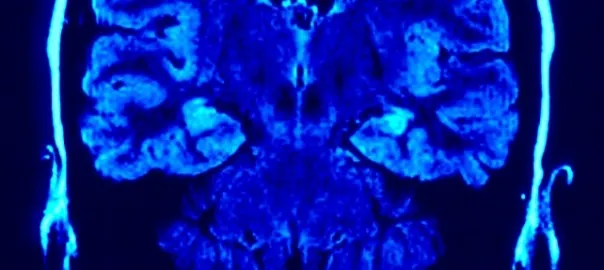
If successful, such technology would be life-changing for epileptic individuals, especially those with rare but devastating seizure syndromes for which little research exists, such as Dravet
Syndrome or Lennox-Gastaut Syndrome.

Even for consumers without memory disorders or neurological syndromes, studying how the brain recalls memories could significantly impact society and societal structures.

According to Steve Ramirez, all memory is reconstruction. Ramirez is the lead author of a paper, detailing a breakthrough success in altering or transplanting memories. His team of researchers at the RIKEN-MIT Center for Neural Circuit Genetics were successful in manufacturing memories in mice, who were able to “recall” the fake memories and act on them.

“Our hope is that, by proposing a neural explanation for how false memories may be generated, down the line we can use this kind of knowledge to inform, say, a courtroom about just how unreliable things like eyewitness testimony can actually be,” says Ramirez.

Their test mice, given to wander in two “rooms,” would be greeted with a slight shock and flash of light in one room, but nothing in the other. Ramirez and his team were able to pinpoint the mice’s memories of these rooms in the hippocampus and transpose one to the other, switching the fearful memory of one room with the safe memory of another. Naturally, the mouse chose to enter the room that his altered memory told him was safe.

The research team aims to use the data to further investigate how false memories are created organically and the conditions causing certain memories to form differently than others. Other scientists, such as Mark Mayford of the Scripps Research Institute, are excited about the ways this data could inform research about thought construction and provide relief for the mentally ill.

“The implications are potentially interventions for diseases of thought such as schizophrenia. You cannot approach schizophrenia unless you know how a perception is put together.”

Even though no comprehensive treatments or cures have been developed for seniors and consumers with neurological deficiencies in 2013, these baffling discoveries give buoyant hope for the advancements awaiting us in the new year.

Sources:
MIT: Ten Breakthrough Technologies of 2013
http://www.technologyreview.com/lists/breakthrough-technologies/2013/

Brain implants: Restoring memory with a microchip
http://www.cnn.com/2013/05/07/tech/brain-memory-implants-humans/

Creating a False Memory in the Hippocampus
http://www.sciencemag.org/content/341/6144/387

The RIKEN-MIT Center
http://picower.mit.edu/About/riken-mit-center

Scientists can implant false memories into mice
http://www.bbc.co.uk/news/science-environment-23447600

Researchers Implant False Memories Into Mice Brains
http://mashable.com/2013/08/04/false-memories/

Mice “incepted” with false memories provide insight into neural phenomena
http://www.riken.jp/en/pr/press/2013/20130726_1/